
Beyond the Firewall: A 2026 Cybersecurity Checklist for Infrastructure Contractors
- Oliver Clayton
- Feb 5
- 5 min read
Cybersecurity in 2026 is no longer just an IT department concern: it's a boardroom imperative. For infrastructure contractors, the stakes have never been higher. With NIS2 regulations now in force across the UK and EU, ransomware attacks targeting critical infrastructure on the rise, and clients demanding robust security credentials before awarding contracts, your cybersecurity posture directly impacts your bottom line.
The days of relying solely on perimeter defenses are over. Modern threats bypass traditional firewalls through compromised credentials, third-party vendors, and cloud misconfigurations. This comprehensive checklist goes beyond basic security measures to address the real-world vulnerabilities infrastructure contractors face in 2026.
Why Infrastructure Contractors Are Prime Targets
Infrastructure projects involve multiple stakeholders, extensive supply chains, and vast amounts of sensitive data: from site plans and safety documentation to employee records and client information. Cybercriminals recognise that contractors often represent the weakest link in the supply chain, providing an entry point to larger clients in energy, transport, and utilities sectors.
A single breach can halt projects, trigger regulatory penalties, damage client relationships, and destroy years of reputation building. The question is no longer whether you'll face a cyberattack, but whether you'll be prepared when it happens.

Access Control: The First Line of Defense
Implement Multi-Factor Authentication Everywhere
Multi-factor authentication (MFA) should be mandatory for all privileged accounts, cloud platforms, SaaS applications, and remote access requests. This single measure blocks approximately 99.9% of automated credential stuffing attacks. If your site managers can access project data with just a password, you're leaving the door wide open.
Enforce Least-Privilege Access
Role-based access controls (RBACs) ensure employees only access the information necessary for their specific roles. A subcontractor working on groundworks shouldn't have access to commercial contracts or payroll data. Create automated workflows that maintain consistent security across employee onboarding, role changes, and offboarding processes.
Eliminate Shared Accounts
Generic "site office" or "project team" login credentials are a cybersecurity nightmare. Every user requires individual authentication, creating clear audit trails and eliminating ambiguity when investigating security incidents.
Adopt Zero Trust Architecture
Zero trust operates on a simple principle: trust nothing and verify everything. Whether a user is inside or outside your network, their access requests require continuous authentication and authorization. Implement micro-segmentation to isolate critical systems, limiting the potential damage if one area is compromised.
Asset Management: Know What You're Protecting
You cannot secure what you don't know exists. Shadow IT: unauthorised applications and devices: creates blind spots in your security posture.
Automate Asset Discovery
Deploy network scanning and endpoint agent tools to continuously discover and inventory all connected devices and installed software. Manual spreadsheets are obsolete; automation ensures accuracy and real-time visibility.
Quarterly Reconciliation
Conduct formal reviews of your asset inventory every quarter. Devices come and go, particularly on active construction sites. Unaccounted tablets, smartphones, and laptops represent unmanaged risk.
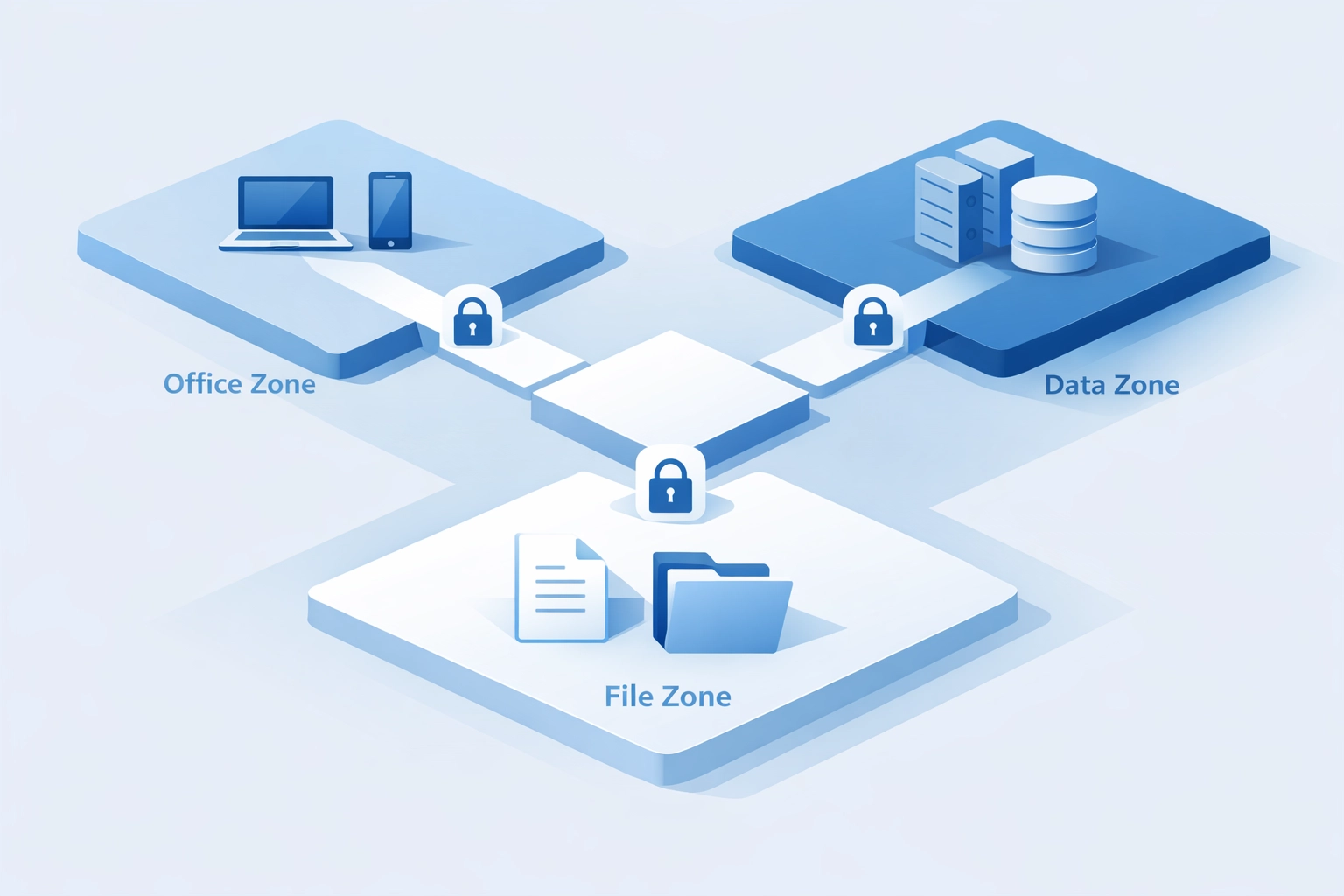
Network Segmentation and Protection
Segment by Data Sensitivity
Divide your network into logical zones based on data classification: sensitive project data, corporate resources, and guest access should never share the same network segment. Use firewalls and access control lists to strictly regulate traffic between segments.
Enforce Modern Encryption Standards
TLS 1.2 or higher should be mandatory for all data in transit, both internally between servers and externally over the internet. Disable outdated protocols like SSL and early TLS versions: they're riddled with known vulnerabilities.
Deploy Full-Disk Encryption
All endpoints and portable media require full-disk encryption. If a laptop goes missing from a site office or a USB drive is lost, the data remains protected.
Vulnerability Management: Patch Aggressively
Unpatched vulnerabilities provide easy entry points for attackers. Establish aggressive patch timelines: critical vulnerabilities within 15 days, high severity within 30 days, and medium or low severity within 90 days.
Deploy automated vulnerability scanners across all systems, with continuous scanning for critical infrastructure. For vulnerabilities that cannot be immediately remediated, obtain signed risk acceptance from management detailing compensating controls such as enhanced monitoring or network isolation.
Data Protection and Backup Strategy
Encrypted, Immutable Backups
Ransomware attacks specifically target backup systems. Implement encrypted, immutable backups that attackers cannot modify or delete. Store backup media offline for enhanced resilience.
Define Recovery Objectives
Establish clear recovery point objectives (RPO) and recovery time objectives (RTO) for all critical systems. If ransomware strikes, how much data can you afford to lose, and how quickly must systems be restored?
Test Backup Viability Regularly
Discovering your backups are corrupted during a crisis is too late. Conduct regular restoration tests to verify backup integrity and procedure effectiveness.
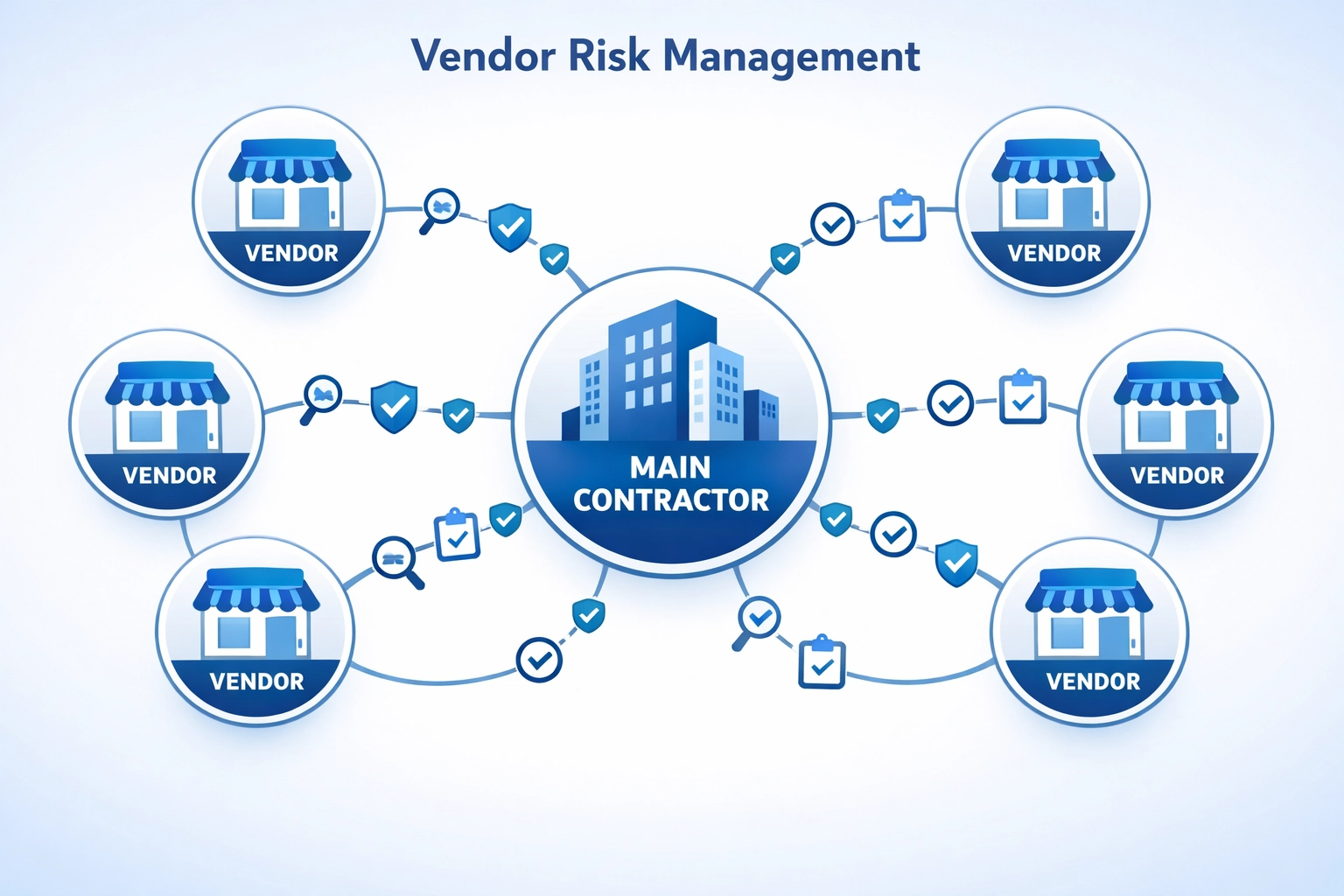
Vendor and Third-Party Risk Management
Your security is only as strong as your weakest vendor. Infrastructure projects involve numerous third parties, each with potential access to your systems and data.
Conduct Pre-Engagement Security Assessments
Before engaging any vendor handling sensitive data, conduct thorough security assessments. Evaluate their security controls, incident response capabilities, and compliance certifications.
Embed Security in Contracts
Include specific security clauses in vendor contracts and Statements of Work. Mandate data handling procedures, incident reporting timelines, and audit rights. Make security requirements contractually enforceable.
Maintain a Vendor Risk Registry
Track all vendors, their access levels, assessment results, and remediation requirements in a centralized registry. This provides oversight and accountability for third-party risks.
NIS2 Compliance: The New Standard
The Network and Information Systems Directive 2 (NIS2) imposes stringent cybersecurity requirements on organisations operating in critical sectors, including construction and infrastructure. Non-compliance carries severe penalties: up to €10 million or 2% of global annual turnover.
NIS2 mandates risk management measures, incident reporting within 24 hours of detection, supply chain security, and senior management accountability. Directors can be held personally liable for cybersecurity failures.
Compliance requires documented policies, regular security audits, employee training programmes, and continuous monitoring. For many contractors, achieving NIS2 compliance means fundamentally rethinking their approach to cybersecurity.
Incident Response Planning
When: not if: a security incident occurs, your response determines the outcome. Develop a comprehensive incident response plan detailing:
Threat identification and containment procedures
Communication protocols (internal and external)
Threat elimination and mitigation steps
System restoration procedures
Post-incident analysis and lessons learned
Conduct regular tabletop exercises to test your incident response plan. Theory and practice diverge significantly during actual crises.
How Cloud-Based Solutions Enhance Security
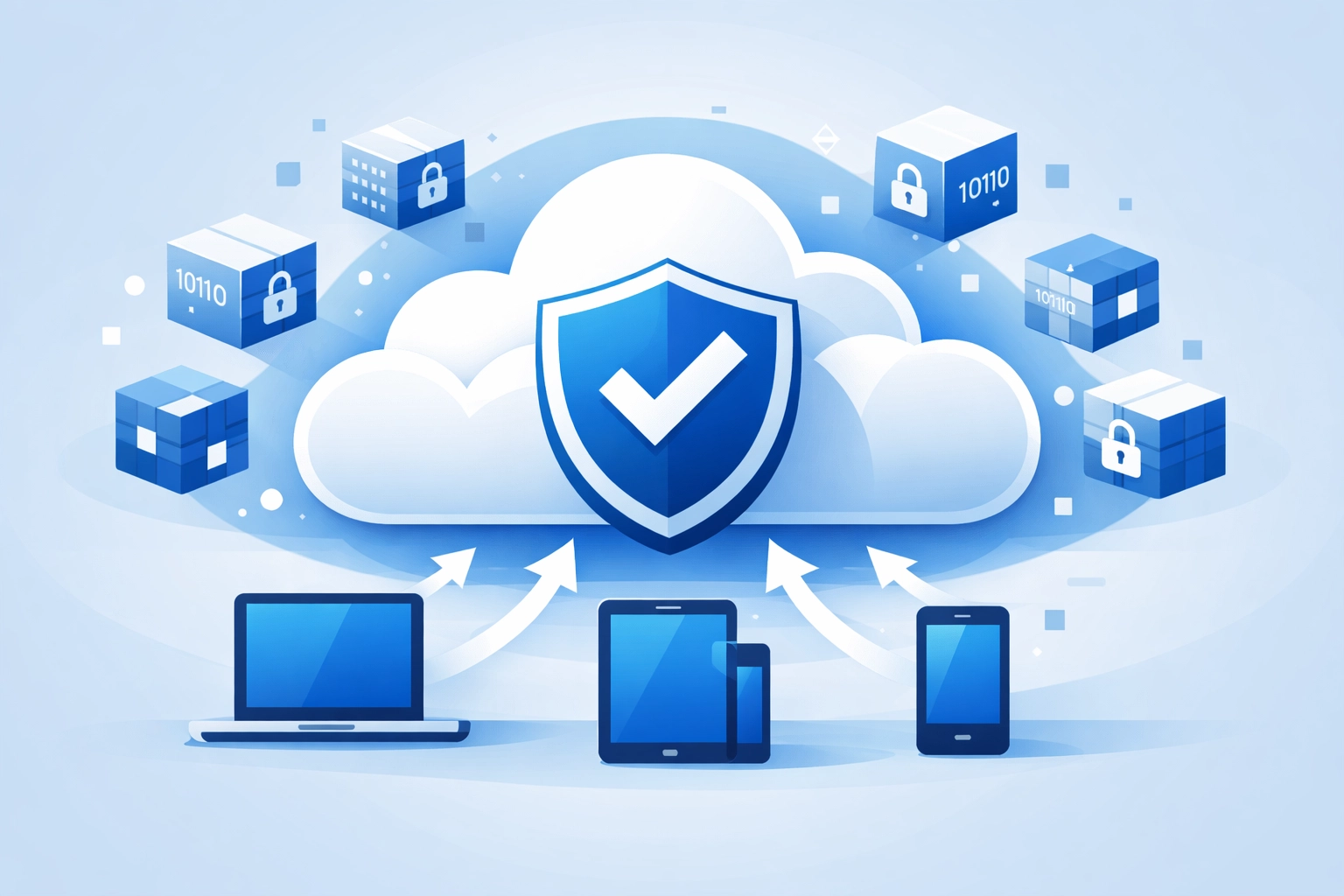
Modern cloud platforms, when properly implemented, offer security advantages traditional on-premises systems cannot match. Reputable providers invest heavily in security infrastructure, employ dedicated security teams, and maintain certifications most contractors could never achieve independently.
IMS System provides a secure, cloud-based environment specifically designed for infrastructure contractors. With enterprise-grade encryption, regular security audits, automated backups, and continuous monitoring, IMS System addresses many items on this checklist by default. Role-based access controls ensure team members access only the information they need, while comprehensive audit logs provide visibility into all system activity.
Cloud platforms also simplify vendor management: rather than each vendor maintaining separate systems with varying security standards, centralised platforms enforce consistent security controls across all users.
Employee Training: The Human Firewall
Technology alone cannot protect your organisation. Employees require regular training on cybersecurity protocols, recognising phishing attempts, handling sensitive data, and reporting suspicious activity.
Conduct security awareness training for all new employees and refresher training annually. Include real-world examples relevant to infrastructure projects: compromised site manager credentials, fake supplier payment requests, and malicious email attachments disguised as project documents.
Moving Forward
This checklist represents significant work, but cybersecurity is an ongoing process, not a one-time project. Start with the fundamentals: access controls, asset management, and backup procedures: then progressively address more advanced requirements.
Many contractors find the prospect overwhelming, particularly smaller firms without dedicated IT security teams. The good news is that modern cloud-based platforms handle much of the heavy lifting, providing enterprise-grade security without requiring specialist in-house expertise.
The cost of inaction far exceeds the investment required for robust cybersecurity. A single breach can result in project delays, regulatory penalties, client losses, and reputational damage that takes years to repair.
In 2026, cybersecurity is not just about protecting data: it's about protecting your business, your reputation, and your ability to compete for contracts. Infrastructure directors who prioritise security position their organisations for sustainable growth in an increasingly digital industry.
Ready to strengthen your cybersecurity posture? Explore how IMS System's secure platform can support your infrastructure projects while addressing modern security challenges, or book a demo to see how cloud-based solutions simplify compliance and enhance security.