
Are Manual Timesheets Dead? Why Smart Time Tracking Matters in Infrastructure Projects
- Oliver Clayton
- Dec 19, 2025
- 5 min read
If you're still processing paper timesheets or chasing down Excel spreadsheets from your field teams, you're probably spending more time on admin than you realise. While manual timesheets haven't completely vanished from construction sites, they're quickly becoming a relic of the past: especially for infrastructure projects where accuracy, compliance, and efficiency aren't just nice-to-haves, they're business-critical.
The shift towards smart time tracking isn't just about going digital for the sake of it. It's about solving real problems that drain your finance team's time, create payroll headaches, and expose your business to unnecessary risks.
The Hidden Costs of Manual Timesheets
Manual timesheets might seem cost-effective on the surface, but the hidden costs add up fast. Research shows that human error in manual time tracking can cost businesses up to 7% of their total payroll annually. For a mid-sized infrastructure contractor with a £2 million annual payroll, that's potentially £140,000 lost to errors alone.
But it's not just about the money going out the door incorrectly. Think about the time your admin team spends:
Chasing missing timesheets from site supervisors
Deciphering handwritten entries and illegible signatures
Cross-referencing hours against project codes and cost centres
Identifying and correcting discrepancies
Managing disputes when payroll doesn't match expectations
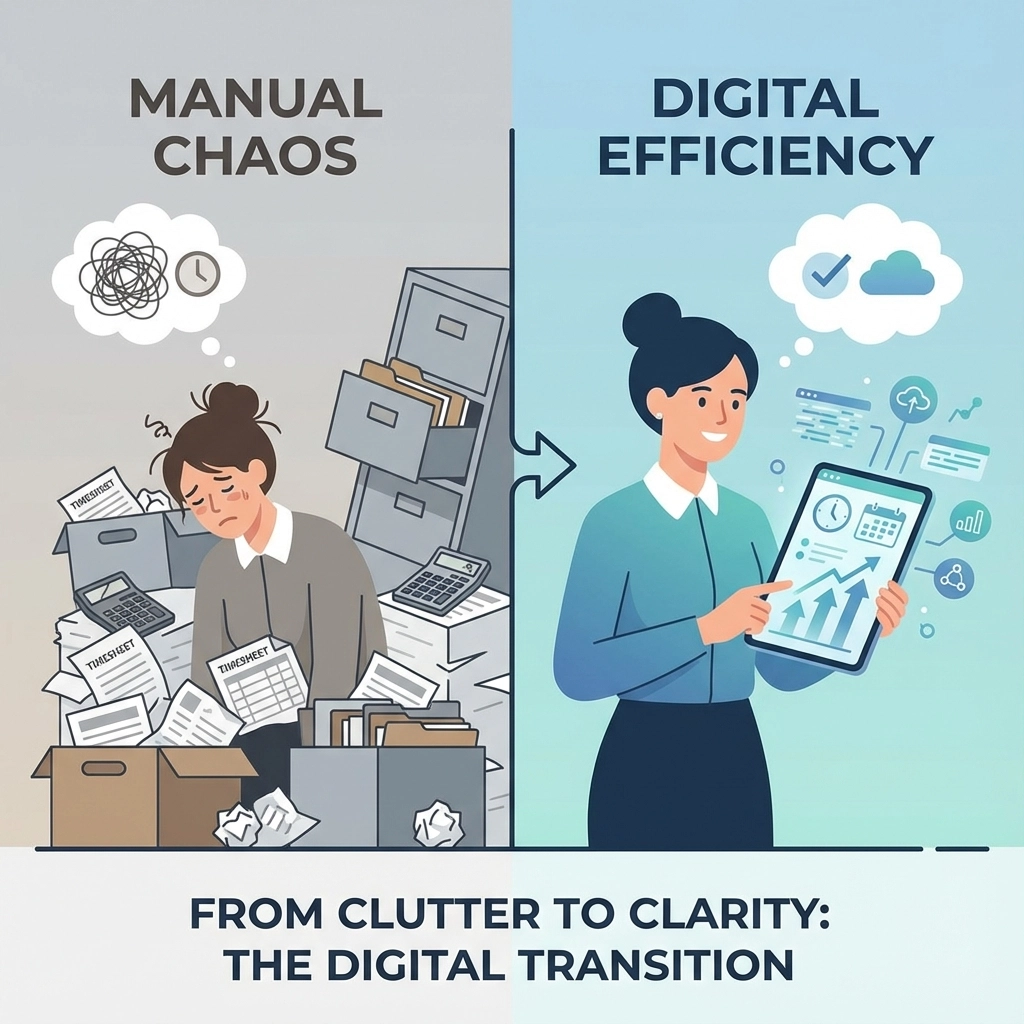
A typical finance administrator might spend 2-3 hours per week just on timesheet processing for a team of 50 workers. Scale that up to larger projects with multiple sites and subcontractors, and you're looking at days of admin time that could be better spent elsewhere.
The accuracy problem gets worse when you consider the complexity of infrastructure projects. Workers might move between different sites, work on multiple project phases in a single day, or switch between different types of work that carry different pay rates. Manual systems simply can't capture this complexity without introducing errors.
The Smart Time Tracking Advantage
Digital time tracking systems flip this equation on its head. Instead of spending hours cleaning up data after the fact, you get clean, accurate data from the start. Modern systems capture time to the minute, automatically apply the correct pay rates, and eliminate the guesswork around what work was done where and when.
The real game-changer is automation. Smart time tracking systems can automatically:
Calculate overtime rates based on weekly hours
Apply different pay rates for different types of work
Track time against specific project codes and cost centres
Flag potential compliance issues before they become problems
Generate ready-to-process payroll exports
This isn't just about convenience: it's about creating a reliable, auditable trail that protects both your business and your workers.
Integration: Where the Real Magic Happens
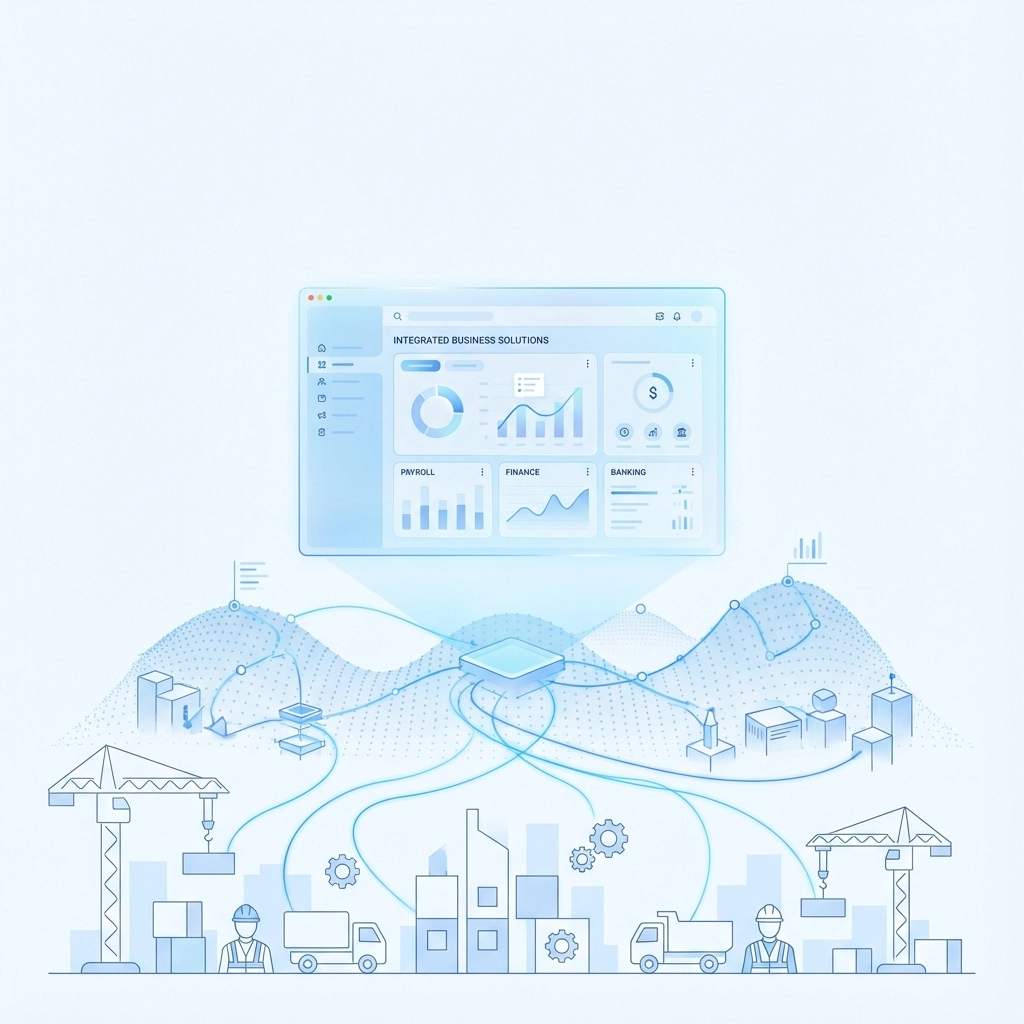
The biggest efficiency gains come when your time tracking system integrates seamlessly with your existing payroll, finance, and banking systems. This end-to-end automation eliminates the manual handoffs that create bottlenecks and errors.
Here's what full integration looks like in practice:
Automated Payroll Processing: Time data flows directly from the field to your payroll system without any manual data entry. Pay rates, overtime calculations, and project allocations happen automatically. What used to take your payroll team days can now be completed in hours.
Real-Time Cost Tracking: Finance teams get real-time visibility into labour costs against project budgets. Instead of waiting until month-end to discover cost overruns, project managers can make adjustments while there's still time to act.
Streamlined Banking: Integrated systems can push payroll data directly to your banking platform, automating payment runs and reducing the risk of duplicate payments or missed wages.

The consistency benefits are enormous. When the same system captures time, calculates pay, and processes payments, there's no room for data to get lost in translation between systems. Your workers get paid accurately and on time, every time.
Eliminating Reconciliation Nightmares
Anyone who's managed payroll for infrastructure projects knows the pain of month-end reconciliation. Manual systems create a paper trail that's often incomplete, contradictory, or simply missing. You end up spending days trying to piece together what actually happened on site.
Smart time tracking eliminates most reconciliation work by creating a complete, accurate record from the start. Every clock-in, clock-out, break, and task switch gets recorded with GPS coordinates and timestamps. When questions arise, you have definitive answers.
This is particularly valuable for infrastructure projects that involve:
Multiple subcontractors with different pay structures
Work across different sites with different cost codes
Compliance reporting for government contracts
Detailed client billing based on actual hours worked
The audit trail created by digital systems also protects your business during disputes or regulatory inspections. Instead of searching through boxes of paper timesheets, you can produce detailed reports in minutes.
Why Infrastructure Projects Need Smart Solutions
Infrastructure projects operate under unique pressures that make smart time tracking essential rather than optional. These projects typically involve large teams working across multiple sites, often with strict compliance requirements and tight deadlines.
Manual timesheets simply can't keep up with this complexity. When you're managing hundreds of workers across different trades, sites, and shifts, the administrative burden becomes overwhelming. Digital systems handle this complexity effortlessly, providing the same level of detailed tracking whether you're managing 10 workers or 1,000.
The mobility aspect is crucial too. Infrastructure workers are constantly on the move: between sites, between tasks, between different areas of large projects. Mobile time tracking apps let workers clock in and out from wherever they are, while GPS verification ensures accuracy and prevents time fraud.
Compliance is another critical factor. Infrastructure projects often involve government contracts with strict labour law requirements, safety regulations, and detailed reporting obligations. Smart time tracking systems can automatically flag potential compliance issues: like excessive overtime or missed breaks: before they become costly violations.
The Bottom Line: Time and Money Saved
The numbers speak for themselves. Organizations that switch from manual to digital time tracking typically see:
85% reduction in payroll errors
60% less time spent on timesheet processing
40% faster payroll runs
25% reduction in labour compliance issues
For a typical infrastructure project, this translates to days of admin time saved every month. Time that can be reinvested in growing the business, improving project delivery, or simply reducing the stress on your finance team.
The cost savings extend beyond just admin efficiency. Accurate time tracking helps identify productivity patterns, optimize crew scheduling, and eliminate time theft. Many companies discover they've been over-paying by 5-10% simply due to inaccurate manual tracking.
Making the Transition Simple
The good news is that modern time tracking systems are designed to be user-friendly, even for workers who aren't tech-savvy. The best systems combine powerful backend automation with simple, intuitive interfaces that workers can learn in minutes.
Cloud-based solutions like IMS System eliminate the IT headaches traditionally associated with new software deployments. There's no complex installation, no server maintenance, and no worry about system backups or updates. Everything just works, letting you focus on running your projects instead of managing technology.
The transition from manual to digital doesn't have to be disruptive. Many organizations start with a pilot project or single site, proving the benefits before rolling out more widely. This approach lets you fine-tune processes and train teams gradually, ensuring a smooth transition.
The Verdict
Manual timesheets aren't just outdated: they're actively holding back your business. The combination of human error, administrative burden, and compliance risk makes them a luxury that infrastructure projects can't afford.
Smart time tracking systems don't just solve these problems; they transform time management from a cost centre into a competitive advantage. When you can process payroll in hours instead of days, when your project costs are always up-to-date, and when compliance happens automatically, you free up resources to focus on what really matters: delivering great projects on time and on budget.
The question isn't whether you should make the switch: it's how quickly you can get started. Every day you stick with manual processes is another day of inefficiency, errors, and unnecessary stress for your team.
Ready to see how smart time tracking can transform your infrastructure projects? Book a demo and discover how much time and money you could be saving.